Russian rental companies expanding their LED screen inventories face a recurring decision: P4.81 or P3.91? The two pixel pitches dominate the medium-resolution rental segment, and both use SMD packaging on die-cast aluminum cabinets that are fast to assemble and road-ready. But they serve different venue profiles, and choosing between them affects both the capabilities of the rental fleet and the cost structure per event.
P4.81 delivers roughly 43,000 pixels per square meter, while P3.91 pushes that to approximately 65,500 pixels per square meter — a 50% increase in pixel density. That gap determines the minimum viewing distance: P4.81 resolves cleanly from about 5 meters, while P3.91 can be used as close as 4 meters. For Russian rental operators, this difference maps directly to which venues and events each screen fits.
Venue Profiles Determine the Right Pitch
In Moscow and St. Petersburg, large concert halls and convention centers such as Crocus City Hall, Expocentre, and ExpoForum typically place the closest audience seats 8-15 meters from the stage. At these distances, P4.81 is visually indistinguishable from finer-pitch alternatives at a significantly lower cost per square meter. A 10 m * 5 m P4.81 screen can be built with roughly 200 cabinets, compared to the same screen requiring approximately 260 P3.91 cabinets for the same physical dimensions.
The picture changes for smaller venues, corporate boardrooms, and exhibition booths where viewers may stand 2-4 meters from the screen. In those settings, P3.91's higher pixel density becomes visible — text is sharper, video content retains more detail, and the image holds up under close inspection. Russian rental companies that serve both large stadium events and intimate corporate functions often carry both pitches in their inventory.
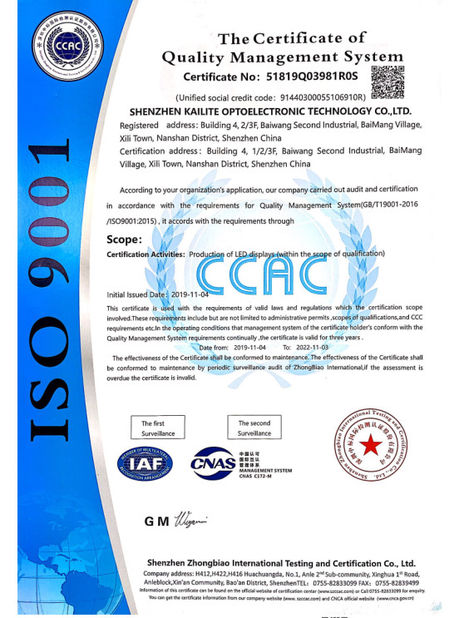
KAILITE Optoelectronic Technology Co., Ltd., based in Shenzhen, produces both P4.81 and P3.91 rental cabinets using the same 500 mm * 500 mm die-cast aluminum frame design. This compatibility allows operators to mix or swap cabinets within the same rigging structure, reducing the accessory inventory needed to support two screen types. Both use SMD packaging — SMD2727 for P4.81 and SMD1921 for P3.91 — with 1/13 scan drivers delivering refresh rates above 1920 Hz.
Brightness Trade-Offs in Russia's Variable Lighting
Brightness is another axis of comparison. P4.81 cabinets typically achieve 5000-6000 cd/m², making them suitable for both indoor use and outdoor deployments where sunlight may strike the screen. P3.91, with its smaller SMD package and denser pixel layout, produces roughly 3500-4500 cd/m² — adequate for indoor environments but less versatile for outdoor festival applications.
For Russian summer events on the Black Sea coast or at outdoor venues in Krasnodar and Sochi, the higher brightness of P4.81 is a practical advantage. Winter events in Moscow — typically indoors — can use either pitch, but P3.91's finer detail may justify its higher per-cabinet cost when the audience is closer and ambient light is controlled.
Total Cost of Ownership for the Russian Rental Fleet
The cost gap between the two pitches is not limited to the initial purchase. P4.81 cabinets use fewer modules per square meter, which means fewer spare modules to stock for field repairs. Shipping weight is similar — both use the same die-cast aluminum frame — but the lower cabinet count for P4.81 means fewer boxes to move for an equivalent screen area.
For a Russian rental company building a 100-square-meter fleet, choosing P4.81 over P3.91 reduces the total cabinet count from approximately 400 to 310 (based on 500 mm * 500 mm standard cabinets). The savings extend to storage space, transport volume, and the labor required for setup and takedown. Over a three-year depreciation cycle, these operational savings can offset the revenue premium that finer-pitch screens command.
Decision Framework for Procurement Teams
Russian rental companies evaluating their next inventory purchase can use a simple framework: if the screen will primarily serve audiences beyond 5 meters and outdoor events account for more than 30% of bookings, P4.81 is the more efficient choice. If the fleet needs to cover close-audience corporate events, broadcast studios, or exhibition stands where viewing distances are under 4 meters, P3.91 justifies its higher investment.
Manufacturers like KAILITE support both configurations with compatible accessories — rigging bars, cable looms, flight cases, and control systems — allowing companies to start with one pitch and expand into the other without re-engineering their operational workflow. This flexibility is particularly relevant in Russia's diverse event market, where a single rental fleet may serve a stadium concert one week and a corporate product launch the next.
The P4.81 vs P3.91 decision is not about which is technically superior. It is about matching screen capabilities to the specific venue profiles and event types that make up a rental company's annual booking calendar. Both pitches have a place in a well-balanced fleet.


 Your message must be between 20-3,000 characters!